Monasteries of Daphni, Hosios Loukas and Nea Moni of Chios

Although geographically distant from each other, these three monasteries belong to the same typological series and share the same aesthetic characteristics. The churches are built on a cross-in-square plan with a large dome supported by squinches defining an octagonal space. In the 11th and 12th centuries they were decorated with superb marble works as well as mosaics on a gold background, all characteristic of the ‘second golden age of Byzantine art’.
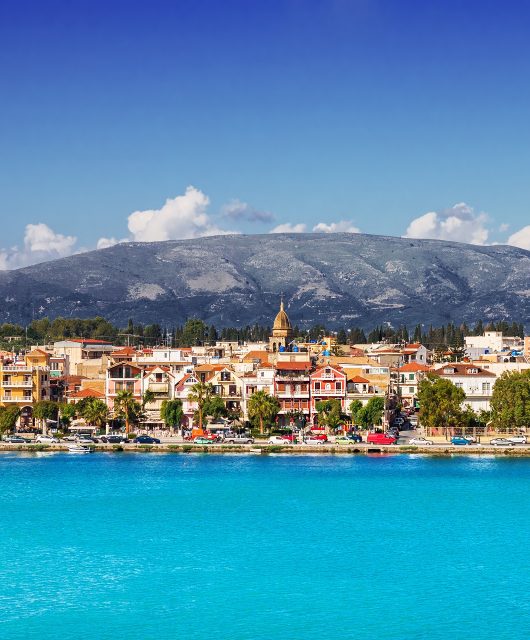
Old Town of Corfu
The Old Town of Corfu, on the Island of Corfu off the western coasts of Albania and Greece, is located in a strategic position at the entrance of the Adriatic Sea, and has its roots in the 8th century BC. The three forts of the town, designed by renowned Venetian engineers, were used for four centuries to defend the maritime trading interests of the Republic of Venice against the Ottoman Empire.

In the course of time, the forts were repaired and partly rebuilt several times, more recently under British rule in the 19th century. The mainly neoclassical housing stock of the Old Town is partly from the Venetian period, partly of later construction, notably the 19th century. As a fortified Mediterranean port, Corfu’s urban and port ensemble is notable for its high level of integrity and authenticity.
Paleochristian and Byzantine monuments of Thessaloniki

Founded in 315 B.C., the provincial capital and sea port of Thessalonika was one of the first bases for the spread of Christianity. Among its Christian monuments are fine churches, some built on the Greek cross plan and others on the three-nave basilica plan. Constructed over a long period, from the 4th to the 15th century, they constitute a diachronic typological series, which had considerable influence in the Byzantine Empire.
- Thessaloniki City Walls (4th/5th centuries)
- Rotunda of Saint George (4th century)
- Church of the Acheiropoietos (5th century)
- Latomou Monastery (6th century)
- Church of Saint Demetrios (7th century)
- Church of Hagia Sophia (8th century)
- Church of Panagia Chalkeon (11th century)
- Church of Saint Catherine (13th century)
- Church of Saint Panteleimon (14th century)
- Church of the Holy Apostles (14th century)
- Church of Saint Nicholas Orphanos (14th century)
- Church of the Saviour (14th century)
- Vlatades Monastery (14th century)
- Church of Prophet Elijah (14th century)
- Byzantine Bath (14th century)
Pythagoreion and Heraion of Samos

Many civilizations have inhabited this small Aegean island, near Asia Minor, since the 3rd millennium B.C. The remains of Pythagoreion, an ancient fortified port with Greek and Roman monuments and a spectacular tunnel-aqueduct, as well as the Heraion, temple of the Samian Hera, can still be seen.